This letter shares my personal experience with chronic illness, surgical menopause, anxiety, and depression. It is not medical advice. Please talk with your own healthcare team about your body and your care.
Sunday · October 18, 2026 · World Menopause Day
When Your Body Starts Hurting and No One Can Tell You Why: Menopause, Estrogen, and Pain
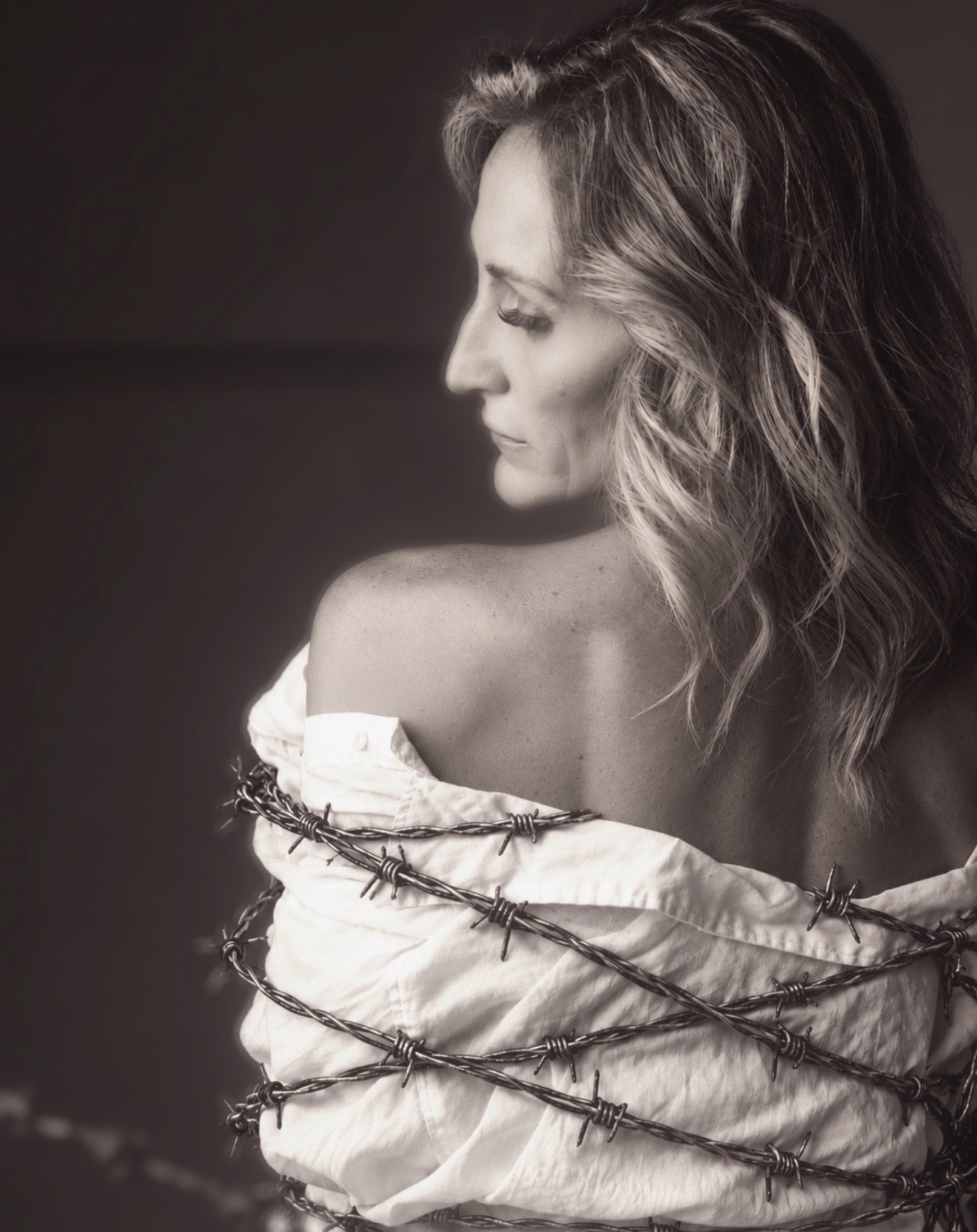
Hey you, it’s me!
Every morning, before I ever have my first cup of coffee, I check my bank account.
Not that bank account. My energy bank account.
How much is in there today? How are my brain cells? How is my body? I’m never functioning at 100. The best I can hope for is to wake up and feel 80%. So before I make a single decision, I have to figure out how I’m going to spend that $80. Am I going to put $10 here and $5 there? If my husband wants to go on a date tonight, or wants to be intimate later, that takes energy, too. I have to plan for all of it before my feet hit the floor, because every step I take and every movement I make affects how I’m going to show up for the next thing. It’s a domino effect.
Today is World Menopause Day, and this year the International Menopause Society is focusing on chronic pain at midlife. So I’m going to tell you something I’ve only recently started saying out loud.
I live with chronic illness. And I’ve been in menopause since I was 31.
Grab your coffee. This one is long, and it’s personal.
Fire ants and “you may be allergic to your husband”
I had my first daughter at 21 and my second at 27. Two very different experiences. And shortly after my second daughter, my health issues started.
Constant bladder infections. Side pain. Not being able to urinate. The best way I can describe it is this: it felt like I was sitting on a mound of fire ants, and they were eating me from the inside out.
I was in and out of doctors’ offices, and no one could tell me what was going on. Then a urologist looked at me and said, “Well, ma’am, you may just be allergic to your husband and need to take an antibiotic for the rest of your life.”
I was 28. I remember thinking, how can I be on an antibiotic for the rest of my life? I just had a baby with this man. How can I be allergic to him? Do allergies really form that quickly? I was so lost and so confused, and he said it like it was no big deal.
For six months, I was on different antibiotics, on and off, for whatever they thought I had. Kidney infection. Bladder infection. Nothing was healing.
Then a new OB/GYN started coming to my doctor’s office from Atlanta two days a week. They asked if I’d like to see her, and I said, sure, no problem, I’ll adjust my schedule.
I was in excruciating pain that day. She took one look at me and said, “You just don’t look good. Are you sure you want to go ahead with your exam today?”
I said, “I don’t know. But I can tell you one thing for sure: these antibiotics are not healing my kidney infection, or my bladder infection, or whatever they think I have.”
I told her about the fire ants. I told her it got worse with certain foods, and even more so when I was intimate. She listened. Then she said, “I think I know what you have.” She did an ultrasound, and she told me, “You basically have no bladder wall. You have interstitial cystitis.”
That was my first diagnosis.
And here’s the part I’ll never forget. I sat in my car and Googled it. The first thing I read said that being diagnosed with interstitial cystitis could be as bad as, or worse than, having cancer.
Try processing that on your own in a car.
Interstitial cystitis is hard, don’t get me wrong. But care for it has come a long way since that day. If you’re sitting in your car right now with a new diagnosis and a search bar, please hear me: one search result is not your whole story.
Menopause at 31, and nobody mentioned hormones
I’d had cysts the size of oranges and grapefruits ever since I was little. In 2013, my doctor said I had a couple of cysts that needed to come out. He biopsied them first, and they came back precancerous.
Then he asked, “Are you going to have any more kids?” And he suggested a full hysterectomy. Everything came out, including my ovaries.
Here’s what I wish I’d done differently. I didn’t have the tools in my toolbox. I didn’t know what questions to ask. I wasn’t a big researcher. I just went by what the doctor told me.
Nobody sat me down and explained what a full hysterectomy would mean for a woman who was 31. We didn’t talk about hormones. We didn’t talk about patches. We didn’t talk about the fact that, overnight, my body would be in menopause.
It changed everything about how I showed up and how I functioned. I was down and out for months.
The day my scalp caught fire
Shortly after the hysterectomy, I started hurting and aching like I’d never hurt before.
The first real symptom was my scalp. It felt like it was on fire. I would pull at my hair because it hurt so badly. I can’t even put into words how much it hurt just to brush my hair. I would lie on the floor and cry: what is happening to me?
First, I was told I had fibromyalgia. Then an internal medicine doctor ran more tests and told me I had lupus. He said that was probably part of why I’d struggled so much with my bladder and with my nerves.
Even now, I can tell when a lupus flare is coming. My feet go cold, even when I’m sweating. Some days it feels like my nerves are shot throughout my whole body.
At the time, we were living in Arkansas, where it could be freezing from September all the way to the end of May. I remember one May it was snowing. The cold and the rain made me hurt from head to toe. I finally told my husband, “We are either going to have to find you a job in a warmer climate, or we’re going to have to have conjugal visits where you come see me for a week at a time.” 😂
We moved to Houston.
Then my hormones shifted again
It took me years to get diagnosed, to figure everything out, and to get it under control. My lupus went into remission for years.
And then, bam. My dad passed away.
My stress hormones went up. I was traveling. I was eating junk. My hormones were shifting all over again, and my body felt it. My lupus came out of remission, and it took me about six months to get it back under control.
I was emotional. I was miserable. I was depressed and isolating, and my anxiety was at an all-time high. I remember waking up and realizing the life I had prayed for no longer fit. I thought, I’ve got to make some changes. I don’t care what I have to do. I can’t keep going on like this.
During that season, I started having panic attacks where I would pass out. That’s when Chanel came into my life. She’s my service dog. When she notices my heart rate rising, she knows to bark or go get someone, because I’m about to pass out. Five years later, she’s still right by my side.
And I’ll be honest about something else. I’m an all-or-nothing person. Sugar has a hold on me: one bite, and I’ll crave it all day. I’ve struggled with food for years. So in hard seasons, I’ve gone looking for a reset, sometimes in all-or-nothing ways. Today, I’m learning that what my body needs most is steady, not extreme.
The bank account, and why it’s so hard to explain
When you’re living with a chronic illness and your hormones shift, your body can feel overwhelmed, and that overwhelm compounds the pain. And because every woman’s symptoms are different, it is so hard to explain to the people we love.
It has taken the people around me years to understand this. One day, I may wake up at 80%. I may walk eight, ten, even fifteen miles. I may take Thor on a five-mile bike ride and write five pieces of content. And then for the next two days, I may not be able to get out of bed.
That’s hard for anyone to comprehend.
It’s a different kind of exhaustion. It’s not “go take a nap and you’ll feel better.” Your body physically will not let you move. There have been days when I could sleep for 24 hours and still wake up exhausted.
So to my friends: when someone with a chronic illness cancels or reschedules, it’s not a you problem. It’s how she woke up.
The whole family goes through menopause
Here’s something I don’t think we say enough: the whole family goes through perimenopause and menopause, not just the woman.
It’s not just the thermostat turned down while everyone else sits in blankets and hoodies. It’s the mood swings. It’s your husband chewing at the kitchen table, and it sounds like he’s sitting right in your ear. 😂
And the woman going through it is frustrated, too. She doesn’t understand what’s happening, and then she has to try to explain it to someone else.
For years, I felt like I was all by myself. I felt like I had to keep it all together for my kids. I didn’t want them to know I was sick. So I faked it till I made it. I people-pleased. I didn’t say, “Today’s just not my day,” or “That isn’t on my agenda today. I’m exhausted, and I’ll have to put it on tomorrow’s list.”
Learning to communicate about my chronic illness changed that. Now, when my body shifts, I tell them: “Hey, my body’s changing again.” Because it affects everyone around us.
What the science says
I’m not a doctor. But as a Certified Menopause and Wellness Practitioner, I want you to know what the research is telling us, because it might help you feel less alone.
Chronic pain at midlife is common. The International Menopause Society’s 2026 white paper estimates that about half of midlife women live with chronic pain, often from more than one condition at once. The conditions it discusses include fibromyalgia, migraine, musculoskeletal pain, and chronic pelvic pain, including bladder pain syndrome.
Pain can be real even when tests look normal. The white paper describes how pain can continue after an injury has healed because the nervous system becomes more sensitive to pain signals. It also notes that how much pain someone feels may have little to do with conventional test results. In other words, normal results do not mean your pain is “all in your head.”
Estrogen touches more than we were told. Estrogen affects muscles, tendons, joints, and bone, and it has anti-inflammatory effects. Researchers believe that is part of why aches and pains rise for many women as estrogen falls. A 2026 review of more than 93,000 women found that muscle and joint pain was reported by about 40% of premenopausal women and by more than half of perimenopausal and postmenopausal women.
Early surgical menopause is its own story. Removing both ovaries before natural menopause causes an immediate drop in estrogen. A Mayo Clinic study found that women who had both ovaries removed before age 46 had higher risks of conditions including osteoporosis, heart disease, arthritis, and depression. Medical societies recommend hormone therapy for women whose menopause comes before 45, at least until about age 51, the average age of natural menopause, unless there is a clear reason not to. My last bone density scan looked like it belonged to a much older woman, so this one is personal for me.
Hormone therapy is not a cure for chronic pain. The same white paper says the evidence for hormone therapy as a treatment for established chronic musculoskeletal pain is limited and mixed. For me, hormones are one piece of a bigger plan, not the whole plan.
If you have lupus or another autoimmune condition, your plan should be individual. Some research has found more mild-to-moderate lupus flares with hormone therapy, while severe flares were rare. Experts say women with lupus should not automatically be excluded from hormone therapy, but the decision should be made with your rheumatologist and your gynecologist together.
For me, today, that plan includes an estrogen gel I rub on my skin, a low-dose vaginal cream, and progesterone at night to help me sleep, all prescribed by my provider. I’m sharing what I use, not what you should use. Your plan should be yours.
Let’s talk about intimacy
Nobody talks about how perimenopause and menopause affect us sexually. It dries everything out. And when sex hurts, or takes energy you don’t have, it’s one more thing we quietly carry.
There are options. Talk to your OB/GYN or menopause provider about vaginal dryness and painful sex. You don’t have to just live with it, and you don’t have to be embarrassed to ask.
What helps me now
None of this is a prescription. It’s what I’ve learned works for my body, with my doctors.
- Protein and real food. I make protein a priority. I go to farmers markets and buy unprocessed foods whenever I can.
- Less soda, fewer energy drinks, less caffeine. They affect my hormones and how I sleep, and sleep affects everything.
- A daily walk. I walk every single day. It lowers my stress, and that helps me rest at night.
- Sleep. When my sleep goes, the pain follows. It’s a domino effect.
- Stretching and Epsom salt baths on the days I can’t move much.
- Magnesium. It helps me. Ask your doctor what amount is right for you.
- Heat or cold. Sometimes my body needs heat, and sometimes it needs cold. I keep a cold pack in the freezer for my face and scalp.
- Being careful in public water. Because my immune system is low, I’m cautious about pools, hot tubs, and the ocean, and I rinse off right away. Ask your doctor what’s right for your body.
I’ll be honest: some days I think, I need one more supplement, one more diet plan, one more exercise routine, and there just aren’t enough hours in the day. I get the frustration. But your future self will love you for taking care of yourself today, because tomorrow, you’ll be able to go.
What the Camino taught my body
Walking the Camino was one of the biggest steps I’ve ever taken, and one of my biggest fears was that my body wouldn’t carry me through.
I prayed, “Lord, you don’t have to take all the pain. Just enough for me to finish.”
I’ve learned how to live with the body I’ve been blessed with. I’ve grieved the life I thought I was going to have. And part of why the Camino was calling me was this: at 44, for the first time, I admitted out loud that I have chronic illnesses. I’m only now finding my voice to say that I can’t always keep up at the same level as everyone else. That’s still frustrating for me.
On the Camino, I had to listen to my body more than ever. After day one, I told my friend, “You may have to go ahead, and I’ll catch up. I’m going to have to stop when I need to stop. I may not make it straight to the top of the hill.” In every town, I had to choose the things that mattered most, because I couldn’t do it all. And there were no rest days like at home. You get right back up and do it again the next morning.
I walk every day, and the Camino still put my body under an extraordinary amount of stress. What kept me going was this: I don’t have to know the whole path. God is going to go before me. All I have to manage is what I can see today. If I had started worrying about whether my luggage would make the transfer, whether the hotel would be ready, or whether a restaurant would be open, I would never have made it.
And after we finished, after the cathedral, the lunch, and our certificates, my friend wanted to go back to see the church the next day. I physically could not go. I could see on her face that she understood, but she couldn’t really understand, either.
Because there’s no language for this. There’s no handbook. There’s no roadmap. It’s just how your body feels.
Maybe this letter can be the beginning of that language.
Questions to bring to your doctor
This is the toolbox I wish I’d had at 28 and at 31.
- “My pain started or changed around [time]. Could my hormones be part of this?”
- “Before this surgery, what will happen to my hormones, and what is the plan afterward?”
- “With my health history, is hormone therapy an option for me? What are my risks and benefits?”
- “Should I have a bone density scan? When?”
- “I have [lupus, fibromyalgia, or another condition]. Can you and my specialist talk about my menopause care together?”
- “My sleep has changed. How might that be affecting my pain?”
- “I have vaginal dryness or pain with sex. What are my options?”
- “If my tests are normal but I still hurt, what is our next step?”
And if you don’t feel heard, get a second opinion. One doctor who listened changed my whole story.
Before you go
To the woman who has been told it’s all in her head: I see you. It’s not.
If you feel pain, it’s pain. If you feel a shift in your body, trust that. We know our bodies better than anyone else. Listen to what your body is telling you. Follow your instincts. Get a second opinion.
Nothing is wrong with you, and you are not alone.
If you’re feeling depressed or anxious, please tell your doctor or someone you trust. If you are in crisis or thinking about harming yourself, call or text 988 to reach the 988 Suicide and Crisis Lifeline.
Until our next chat.
Just stay sweet out there.
I love you, Jenn
Don’t quit in the quiet.
P.S. Loving someone with a chronic illness is hard, too. Next, I’m asking my husband what it has been like to love a woman with chronic pain, in a resource for the people who love us. Coming soon. In the meantime, come find me on Instagram @justjennboard and tell me: what is in your bank account today?
Frequently asked questions
Can menopause cause body aches and joint pain?
Many women report more muscle and joint pain as estrogen falls. A 2026 review of more than 93,000 women found that muscle and joint pain was reported by about 40% of premenopausal women and by more than half of perimenopausal and postmenopausal women. New or worsening pain should still be evaluated, because other conditions can cause similar symptoms.
How common is chronic pain at midlife?
The International Menopause Society’s 2026 white paper estimates that about half of midlife women experience chronic pain, often from more than one condition, such as fibromyalgia, migraine, musculoskeletal pain, or chronic pelvic pain.
What is surgical menopause?
Surgical menopause happens when both ovaries are removed before natural menopause. Estrogen drops immediately rather than gradually. Medical societies recommend hormone therapy for women whose menopause occurs before 45, at least until about age 51, unless there is a clear reason not to.
Can menopause affect lupus?
Hormonal changes can affect autoimmune conditions, and experiences vary. Some research has found more mild-to-moderate lupus flares with hormone therapy, while severe flares were rare. Women with lupus should make hormone decisions with their rheumatologist and gynecologist.
Does hormone therapy treat chronic pain?
Hormone therapy can help many menopause symptoms, but the International Menopause Society’s 2026 white paper says the evidence for hormone therapy as a treatment for established chronic musculoskeletal pain is limited and inconsistent. Most women do best with a whole-person plan that may include movement, sleep, stress care, and treatment for any underlying conditions.
What is interstitial cystitis?
Interstitial cystitis, also called bladder pain syndrome, is a chronic condition that causes bladder pressure, bladder pain, and sometimes pelvic pain, often with frequent or urgent urination. It is often mistaken for repeated urinary tract infections. A urologist or urogynecologist can help with diagnosis and treatment.
This letter is for education and encouragement. It is not medical advice, diagnosis, or treatment. Talk with your own healthcare provider about your symptoms and care.
Sources
- International Menopause Society, World Menopause Day 2026 and the 2026 white paper on chronic pain at midlife, published in Climacteric (as reported by The Well News)
- Kruse et al., 2026, JBJS Open Access: musculoskeletal symptoms across menopause stages (systematic review and meta-analysis of 93,021 women)
- Mayo Clinic News Network: Reduce health risks from early removal of ovaries
- Consultant360: Menopausal hormone therapy may be an option in some women with lupus
- 988 Suicide and Crisis Lifeline: 988lifeline.org
Write Me Back
What is in your bank account today?