Can Beauty Products Affect Your Hormones?
What Women in Menopause and Perimenopause Should Know
Hey you, it’s me! 💋
Today we’re talking everything beauty and hormones. So grab your cup of tea or coffee and come sit with me for a minute, because I did not realize how many everyday products we use on and in our bodies can be part of a bigger conversation about what our bodies are exposed to. And yes, I’m talking toothpaste, shampoo, and conditioner, too.
I started wondering about the everyday products we use and whether they could be part of the hormone conversation. Then toothpaste, shampoo, and conditioner came up, and I thought, “Wait, really?” You know me, I had to go research it.
Toothpaste surprised me, and I didn’t realize “fragrance” on a label may not tell you every ingredient in that blend. It made me want to understand what the research actually says without panicking over every product in my bathroom.
I’m navigating midlife too, so I want to understand what may be part of the conversation around our hormones. As a Certified Menopause and Wellness Practitioner, I want to share what the research says in a way that helps people feel informed, not scared.
Can beauty products affect our hormones? And what should we actually know if we’re in perimenopause or menopause?
Here’s the short answer: some chemicals used in certain personal care products can interact with the body’s hormone system. Researchers are still studying what those exposures mean for real people, and the evidence does not say that every beauty product changes your hormones or that one product is causing your menopause symptoms. The details matter: which ingredient, how much exposure, how often, and what else we’re exposed to in daily life.
What does it mean to disrupt hormones?
Our endocrine system is the group of glands and organs that makes and manages hormones. An endocrine-disrupting chemical is a substance that can interfere with some part of hormone action. That could mean affecting how a hormone is made, carried, received, or broken down. The phrase can sound scary, but it describes a possible way a chemical acts. It does not automatically tell us how much risk a person has from a product used as directed.
And exposure is not the same thing as harm. Finding a chemical or one of its breakdown products in a urine sample tells researchers that someone has been exposed. It does not, by itself, prove that the exposure caused a health problem.
Which beauty product ingredients are researchers watching?
Phthalates
Phthalates are a family of chemicals used for different purposes. Some have been used in nail polish or hair products, and diethyl phthalate, or DEP, has been used as a solvent or fixative in fragrance. The word “phthalates” covers many different chemicals, so it is not accurate to treat them all as if they have the same uses or the same evidence.
Here’s one frustrating part for label readers: fragrance can be listed as a single ingredient, so the label may not tell you every component in the fragrance mixture. The FDA says it does not currently have safety concerns about DEP as it is used in cosmetics and fragrances. Researchers continue to study phthalates from many sources, including personal care products.
Parabens
Parabens are preservatives. They help keep bacteria and mold from growing in products, which is part of keeping the product safe to use. You may see names such as methylparaben, propylparaben, butylparaben, or ethylparaben on an ingredient list.
Parabens have been studied because some have shown hormone-related activity in laboratory research. That does not tell us the effect of the amount used in a particular product on a person. The FDA says that, at this time, it does not have information showing that parabens as used in cosmetics have an effect on human health, and it continues to review new research. Preservatives also serve a purpose, so “paraben-free” is not automatically the same as safer.
PFAS
Some PFAS are intentionally used in certain cosmetics to help with texture, shine, smoothing, or water resistance. The FDA’s 2025 assessment found significant gaps in the available safety data for many PFAS used in cosmetics, so it could not make a definitive safety determination for most of them. That’s a real area where more information is needed. It is not a reason to assume every cosmetic contains PFAS or that every product with a long-wear claim is harmful.
Triclosan
Triclosan comes up in conversations about hormones, but it is not something to assume is hiding in every soap or shampoo. In 2016, the FDA ruled that triclosan and several other ingredients could no longer be marketed in certain over-the-counter antibacterial soaps and body washes because manufacturers had not provided the required evidence of safety and effectiveness for those products. That rule applied to those wash-off antibacterial products, not every product category.
What does the research say about menopause?
This is the part I wanted to understand for us. There is some research that looks directly at women in midlife. In a study using data from 1,189 women ages 45 to 56 in the Study of Women’s Health Across the Nation, researchers found that certain urinary phthalate metabolites were associated with slightly lower testosterone and with lower anti-Müllerian hormone (AMH), a marker of ovarian reserve. They did not find significant associations with estradiol, FSH, or the timing of natural menopause. The study measured exposure from all sources, not beauty products alone.
Another study followed 744 women in the Midlife Women’s Health Study for up to four years. Some urinary phthalate metabolites were associated with certain hot-flash outcomes, though a few associations went the other way. The researchers called for more study. This kind of observational research can show an association, but it cannot tell us that a particular shampoo, fragrance, or lotion caused someone’s hot flashes.
So, yes, this is an area worth studying. And yes, it connects to midlife. The research is still developing, and it does not give us a simple list of products that cause menopause symptoms. Perimenopause and menopause already bring real hormone shifts, and symptoms can change for many reasons. If you’re having hot flashes, sleep changes, mood changes, or anything else that is affecting your life, bring it up with your healthcare professional. You deserve support that looks at the whole picture.
And what about toothpaste, shampoo, and conditioner?
I brought up toothpaste because it surprised me to see it included in conversations about personal care products. But that does not mean ordinary toothpaste has been shown to disrupt hormones or cause menopause symptoms. Products can contain many ingredients, and the evidence is ingredient-specific. Fluoride toothpaste also helps prevent tooth decay, so please do not stop using it because of a broad social media claim. If you have a specific ingredient or health concern, ask your dentist or healthcare professional.
The same goes for shampoo and conditioner. Those products are not one single formula, and they do not all contain the same ingredients. A rinse-off product and a leave-on product can also mean different patterns of exposure. We can read labels and make choices that feel right for us without assuming the worst about every bottle in the shower.
What can we do without throwing out the whole bathroom?
I’m not interested in making anyone panic or feel like they have to replace every product they own today. If you want to be more intentional, start small:
Look at the products you use most often, especially products you leave on your skin or use every day.
Read the ingredient list. For parabens, look for ingredient names ending in “paraben.” Some phthalates may be listed by name, while fragrance ingredients can be grouped under “fragrance” or “flavor.”
If reducing fragrance exposure matters to you, look for “fragrance-free.” “Unscented” can sometimes mean that a scent has been masked, so check the ingredient list or ask the company if you need more detail.
Choose one product to switch when you run out, if you want to make a change. You do not need a complete bathroom makeover.
Be cautious with big claims from products marketed as “clean,” “natural,” or “hormone balancing.” Those words do not, by themselves, prove a product is safer or that it will change your hormones.
Keep using products that protect your health, including sunscreen and dental care. If you are considering changing a prescription, hormone therapy, or a product recommended by your clinician, talk with them first.
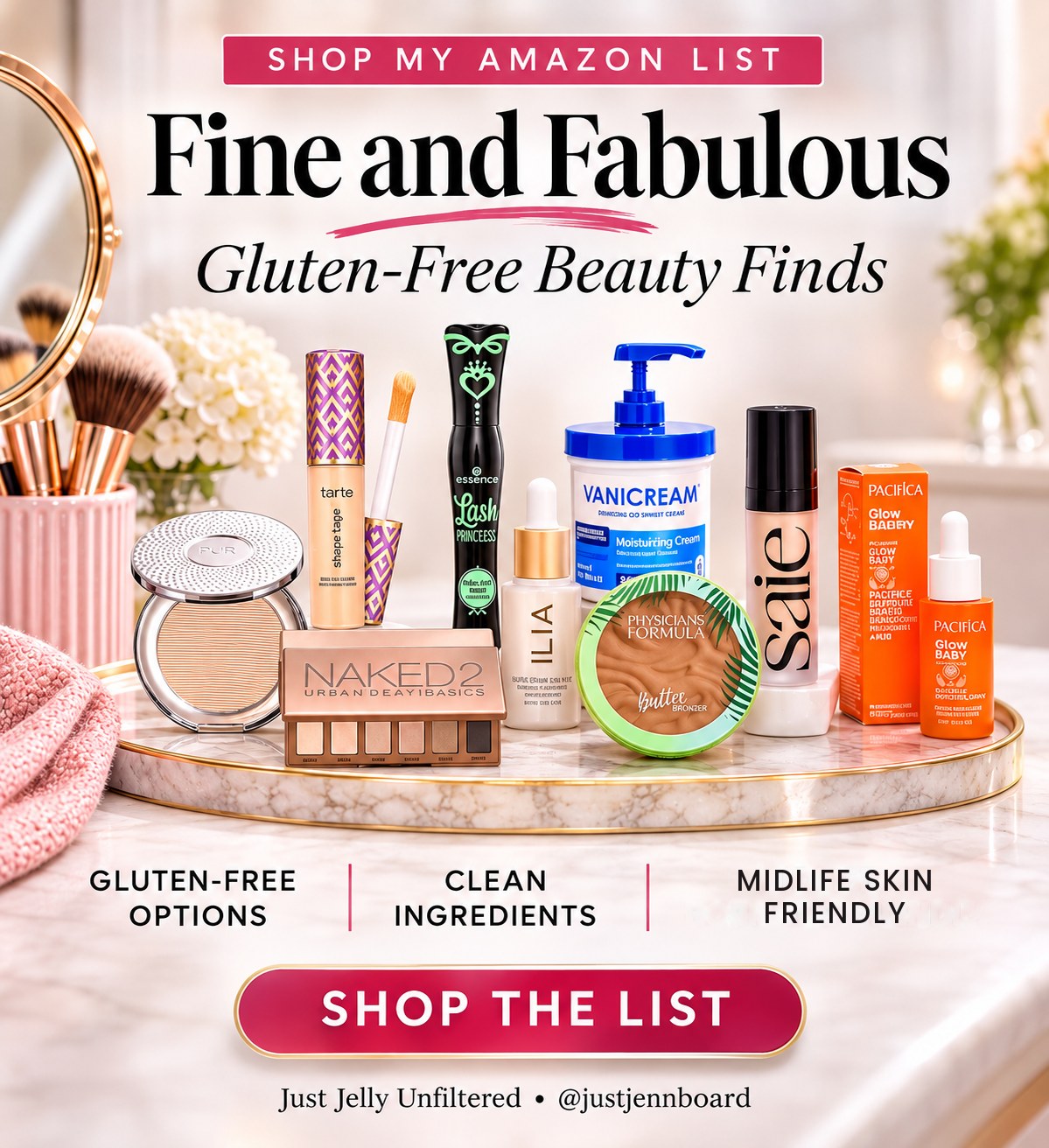
If you are looking for a place to start, I put together an Amazon list of finds I like:
In the United States, most cosmetics are not approved by the FDA before they go on the market, although companies are responsible for product safety and labeling, and federal law now gives the FDA additional authority over cosmetics. That is useful context when we see a package that looks official or a product claim that sounds scientific. A label is a place to start, not a guarantee that every question has been answered.
The takeaway
Can beauty products affect your hormones? Some ingredients in some personal care products can interact with hormone systems, and researchers are studying how everyday exposures may relate to health, including during midlife. We have early research connecting some phthalate exposures with hormone measures and hot-flash patterns in women, but that does not prove that a specific beauty product caused those changes.
I started paying closer attention to the products I use and what’s on the labels. I’m not throwing everything in my bathroom away. I want to make thoughtful choices without panicking.
Start with the products you use most, check the labels, and ask good questions. We can stay curious without carrying the whole burden of solving a much bigger research and regulation issue on our own.
And if you’re in perimenopause or menopause and something feels different, please bring it up with a healthcare professional. You do not have to figure it all out from a label or a late-night internet search.
Have you ever looked at a label in your bathroom and thought, “Wait, really?” Write me back in the Pen Pal section of The Sweet Spot Backstage. I would love to hear from you. 💌
Until our next chat, just stay sweet out there.
I love you, Jenn 💋
Don’t quit in the quiet.
Quick Answers: Beauty Products and Hormones FAQs
Can beauty products affect your hormones?
Some chemicals used in certain personal care products can interact with hormone systems. The level of concern depends on the ingredient and exposure, and current research does not show that every beauty product changes hormones or causes symptoms.
Which beauty product ingredients are linked to hormone concerns?
Researchers have studied chemicals such as some phthalates, parabens, and PFAS in connection with hormone activity or other health outcomes. These are broad chemical groups, and the evidence differs by chemical, product, exposure, and health outcome.
Can beauty products make menopause symptoms worse?
Some observational studies have found associations between urinary phthalate metabolites and hot-flash patterns in midlife women. They do not prove that a specific beauty product causes hot flashes, and researchers say more study is needed.
Does toothpaste affect hormones?
There is no basis in the research discussed here to say that ordinary toothpaste causes hormone disruption or menopause symptoms. Toothpaste formulas vary, and fluoride toothpaste helps prevent tooth decay. Ask your dentist about a specific concern before changing your routine.
Should I throw away products that contain parabens or fragrance?
You do not need to throw away every product because of a broad claim. The FDA says it does not currently have information showing parabens as used in cosmetics affect human health. Fragrance can be listed as a general term on a label. If you prefer to reduce fragrance exposure, choose fragrance-free products as you replace items.
Research & Further Reading
U.S. FDA. FDA Finds Insufficient Data to Determine Safety of PFAS in Cosmetic Products
U.S. FDA. Skip the Antibacterial Soap; Use Plain Soap and Water
Pin This for Later 📌
Save this conversation to your Pinterest board for the next time you are reading a label.
Tag Me! 💄
Checking your labels? Tag me @justjennboard and show me the product that surprised you.
Want more conversations like this? Subscribe to The Sunday Scoop 🗞️, my weekly newsletter filled with midlife conversations, helpful resources, upcoming adventures, and a little bit of everything in between.
As an Amazon Associate, I earn from qualifying purchases. Shopping through these links supports Just Jelly Unfiltered at no extra cost to you.
Write Me Back
Have you ever looked at a label in your bathroom and thought, “Wait, really?”